
B2B system integration: 4 hurdles with ERP, PIM & shop
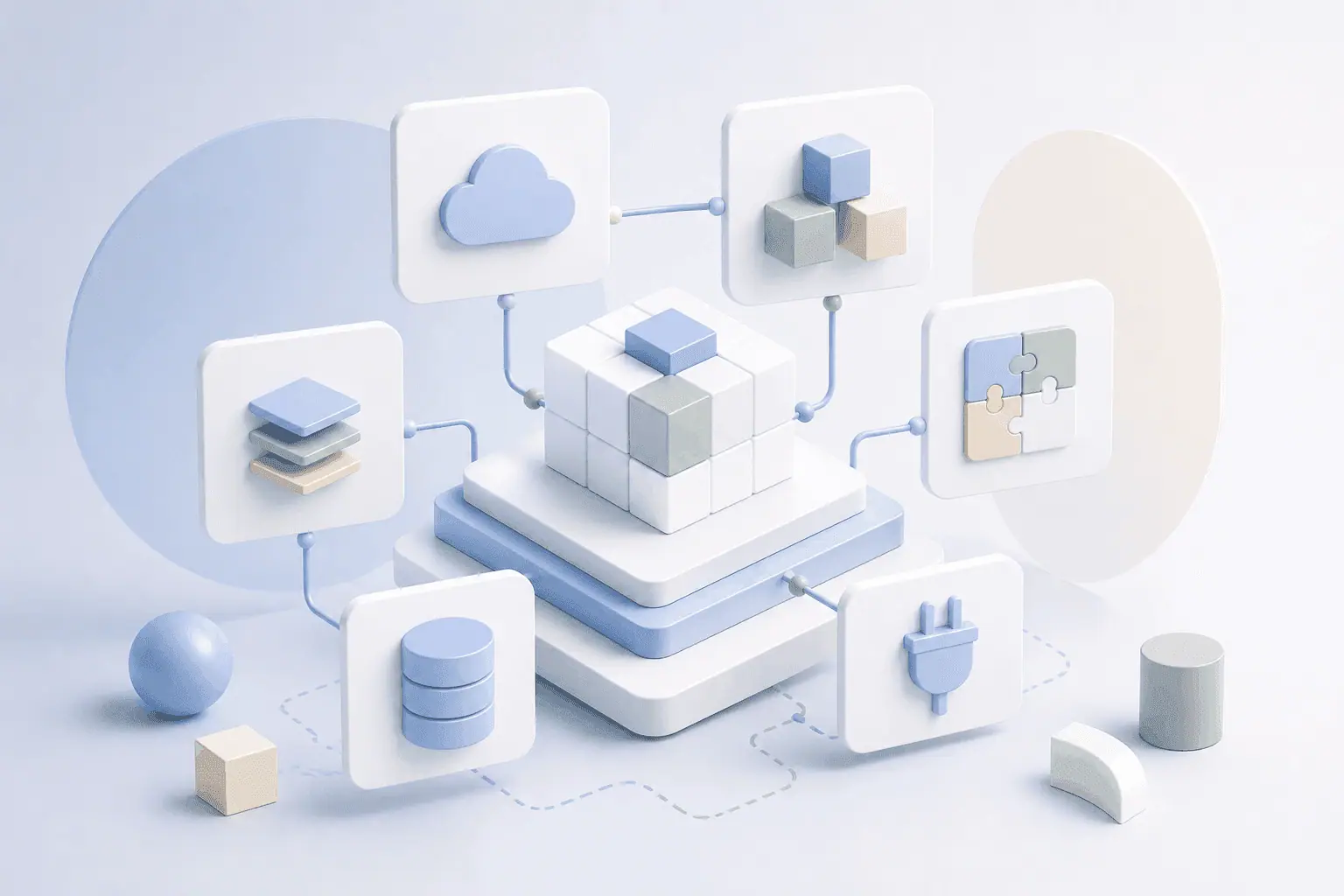
In 2026 a mid-sized manufacturer of technical components faces a familiar challenge: the ERP system has been managing orders and stock levels reliably for years, a new PIM system is meant to structure product data, and the planned B2B shop is finally to give customers a way to order digitally. Yet between these three systems there is a gap that neither the IT department nor external service providers can close without further ado. B2B system integration turns into a test of patience – and without a clear strategy into a risk for the whole digitalisation project.
While the ERP connection, PIM and Shopware integrations are technically feasible, many projects founder on avoidable hurdles: incompatible data formats, unclear responsibilities and underestimated complexity. Commerce Partner has supported more than 2,500 B2B projects since 1999 and knows the typical stumbling blocks around interfaces in detail. This article examines four central integration hurdles and sets out pragmatic approaches that managing directors and sales directors can put into practice straight away.
Why B2B system integration is becoming a strategic priority
What B2B customers expect has changed fundamentally. What has long been standard in B2C – real-time availability, automatic price adjustments, personalised product recommendations – is increasingly taken for granted among business customers as well. An isolated shop that does not communicate with ERP and PIM cannot meet these requirements. Maintaining data manually in several systems not only costs time and money, it also produces errors that put the trust of existing customers at risk.
Imagine a customer orders a product in the shop that the display says is available – but the ERP reports it as not deliverable. Or product descriptions in the shop differ from the technical data sheets in the PIM. Inconsistencies of this kind arise when systems are not cleanly integrated. The consequences: complaints, extra work in customer service and lost orders. For mid-sized manufacturers and wholesalers that depend on long-term customer relationships, this can threaten the business itself.
The good news: well-considered B2B system integration creates not only stability but also opportunities for growth. Automated processes ease the load on sales, real-time data allows precise control, and scalable interfaces pave the way for international expansion or new sales channels. But the route there leads across four central hurdles that every company has to clear.
The four central integration hurdles in detail
Hurdle 1: data quality and incompatible formats
ERP systems speak a different language from PIM solutions, and Shopware expects data in a third format. Item numbers, price structures, units of measure – what looks logical in the ERP rarely fits straight into the PIM or the shop. On top of that, many mid-sized companies have data structures that have grown over years and contain inconsistencies. Missing product descriptions, duplicate item numbers or outdated classifications make an automated connection impossible.
The solution starts with an honest stocktake. Before you develop interfaces, you should clean up your master data and define a common data model. That takes time but pays off in the long run. A PIM system can serve as the central data source here, supplying both the ERP and the shop with consistent information. Commerce Partner recommends not skipping this step – even when external service providers promise to map everything somehow.
Hurdle 2: missing middleware and interface expertise
Many companies underestimate how complex communication between ERP, PIM and shop really is. A direct point-to-point connection may still work with two systems, but it becomes unmanageable with the third at the latest. Without middleware – a central integration layer that orchestrates the data flows – fragile constructions emerge that have to be reworked with every change to a system.
Modern integration platforms such as Shopware Flow Builder, Apache Camel or specialised iPaaS solutions (Integration Platform as a Service) offer a remedy. They decouple systems from one another and allow flexible adjustments without every interface having to be reprogrammed. It is important to clarify early on who carries responsibility for this middleware – internal, external or a mix of the two. Commerce Partner relies on transparent architectures in which customers have access to the logic and the data flows at all times.
Hurdle 3: unclear processes and missing governance
Technology alone solves no integration problems. Projects often fail because nobody has defined which system is the leading one for which data. Who maintains prices – the ERP or the shop? Who updates product descriptions – the PIM, or the department directly in the ERP? Without clear governance, data silos, duplicate maintenance and conflicts between departments are the result.
The solution lies in defining a single source of truth for every data category. Typically the ERP leads on stock levels and prices, the PIM on product information and media, and the shop on customer-related data such as wish lists or order history. This division has to be documented and accepted by everyone involved. Commerce Partner helps customers to develop governance models of this kind – not as a theoretical construct, but as a workable basis for day-to-day operations.
Hurdle 4: performance and scalability
An ERP connection that works in test operation with 500 items can break down with 50,000 items and simultaneous orders. Many companies underestimate the demands on performance and scalability, particularly when international markets or additional sales channels are added. Slow interfaces lead to timeouts, outdated stock levels in the shop and frustrated customers.
The solution calls for a forward-looking architecture: asynchronous data transfer instead of real-time queries, caching strategies for frequently requested data, and scalable cloud infrastructure. Shopware's API-first architecture provides good conditions for this, but here too the implementation decides between success and failure. Commerce Partner plans integrations for growth from the outset – not for the lowest common denominator.
Conclusion: integration as the foundation for digital growth
Connecting ERP, PIM and shop is not a technical side project but the foundation of every successful B2B digitalisation. Anyone who takes the four central hurdles – data quality, middleware, governance and performance – seriously and tackles them systematically creates a stable basis for scalable growth. Improvised solutions may work in the short term, but in the long run they cost many times as much in time, money and nerves.
Commerce Partner has been supporting mid-sized manufacturers and wholesalers with exactly these challenges since 1999. With more than 2,500 completed projects we know the pitfalls – and the shortcuts. If you are facing the decision to integrate your systems, or if your current project has stalled: take up our free 30-minute strategy call. We analyse your starting position and set out concrete next steps. Arrange your appointment at www.commerce-partner.com/kontakt and lay the foundation for a B2B platform that is fit for the future.